

Customers rarely call to say they’re leaving your dealership. They just stop showing up, and you never have a chance to retain them.
Maybe it starts with a frustrating appointment experience. Maybe they buy tires somewhere else because it felt easier. Maybe communication during service wasn’t great, so the next time around, they decide to try another shop instead. Small frustrations slowly make another option feel more convenient, more valuable, or simply easier.
That matters more than ever because service retention doesn’t just impact fixed ops revenue. Nearly 45% of dealership service customers say they plan to buy their next vehicle from the dealership where they currently service.
The dealerships keeping customers loyal right now aren’t necessarily doing one huge thing differently. They’re just doing a better job removing friction before customers have a reason to look elsewhere.
Loyalty Is More Fragile Than Dealerships Think
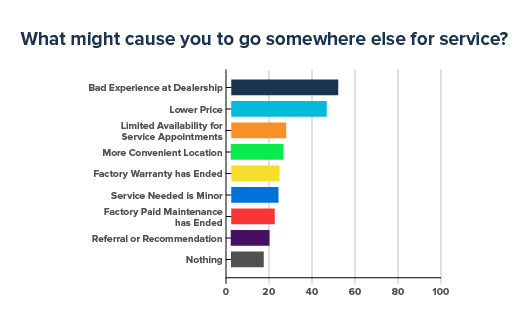
In the 2026 Dealership Service Retention Report, 50% of customers said a bad experience would cause them to go somewhere else for service. Even among “extremely loyal” customers, nearly half said the same thing.
That’s what makes retention harder today. Loyalty isn’t permanent anymore.
Customers are constantly comparing convenience, communication, pricing, and overall experience against every other option available to them. And once another shop starts feeling easier or more helpful, habits change quickly.
What’s telling is that these same defection reasons — bad experiences, lower prices elsewhere, and appointment availability — have stayed remarkably consistent across DriveSure’s Dealership Retention Reports in 2020, 2023, and now, 2026.
This isn’t a temporary shift in customer behavior. It’s the reality dealerships are operating in.
Customers Don’t Think About Convenience Until It Fails Them
Appointment availability wasn’t the highest-ranked factor when customers were asked where they choose to service their vehicle, but it quickly becomes a problem when customers can’t get in when they want to.
In the report, 26% of customers said limited appointment availability would cause them to go somewhere else for service. And for less loyal customers, convenience issues become even more important.
The tricky part is that dealerships often never see this defection happen.
A customer might try to book online, see a long wait, get frustrated, and schedule somewhere else instead. No complaint or angry phone call. They just quietly disappear from the service drive.
Customers don’t compare your scheduling experience to another dealership anymore. They compare it to every easy digital experience they have everywhere else.
Tire Sales Are Quietly Driving Defection
Tires continue to be one of the biggest blind spots in dealership retention.
According to the report, only 33% of dealership service customers bought their last set of tires from the dealership. Even among extremely loyal customers, the majority still purchased tires somewhere else.
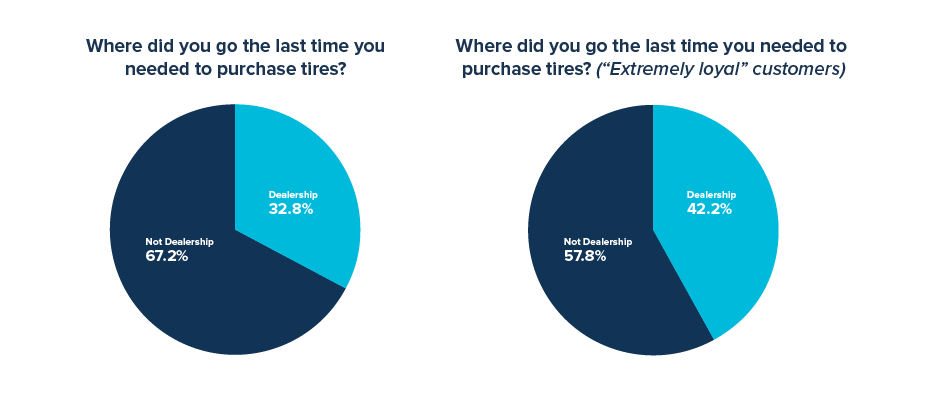
This is an important trend for dealerships to solve for, because tire sales don’t just generate revenue. They create service habits that drive even more revenue.
When customers buy tires from a tire chain or big box store, they’re also experiencing that company’s pricing, communication, convenience, and maintenance process. And since those businesses also handle oil changes, brakes, batteries, and other routine services, every lost tire sale becomes a potential retention problem.
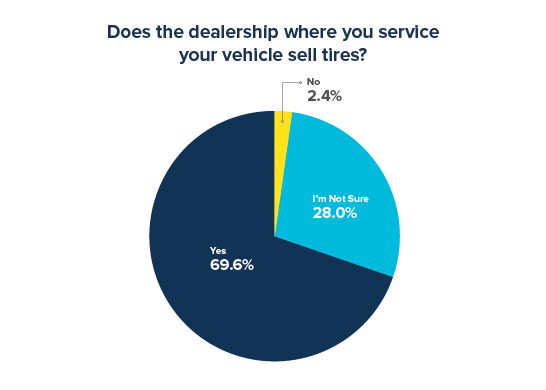
One surprising insight is that awareness is still a huge issue, and roughly30% of customers aren’t even sure their dealership sells tires. And when customers do know their dealership sells tires, they’re about 10% more likely to buy them there.
At the same time, tire rotations are becoming one of the most frequent service needs as oil change intervals continue getting longer.
The stores winning tire business aren’t just selling more tires. They’re keeping customers connected to the dealership more consistently over time, which is where a real opportunity lies to increase retention..
Communication Now Shapes the Entire Service Experience
Service customers in 2026 have come to expect regular updates during service, not just a rundown after service is done.
Consider how these same customers are using services like Amazon Prime. From the beginning of the purchase all the way through delivery, there is never a question about when it will be delivered, where it’s at, or if it’s delayed. They expect the same sort of service when they leave their vehicle at your shop.
In the report, 72% of customers said text messaging is their preferred way to receive updates while their vehicle is being serviced. Email barely registered.
That shift reveals communication now plays a huge role in how customers judge the entire experience. Long periods of silence create frustration, even when the repair itself is done correctly.
The same thing shows up with video inspections. Across all survey participants, 41% said video inspections would make them more likely to trust recommended work. But among customers who had actually received one before, that number jumped to 66%.
The takeaway is pretty simple: customers are more likely to approve work when they understand what they’re seeing and feel informed throughout the process.
Prioritizing communication not only improves customer satisfaction, but builds confidence that the dealership is transparent, organized, and worth coming back to.
Retention Is Won in Small Moments
The dealerships retaining their customers right now aren’t doing one massive thing differently. They’re just making the customer experience easier, more consistent, and more transparent, every step of the way.
That can mean:
- Making appointment scheduling simpler
- Communicating proactively during service
- Creating more awareness around tires and maintenance offerings
- Using video inspections to build trust
- Asking customers to schedule their next visit before leaving
None of those things feel revolutionary on their own, but together they reduce the friction that slowly pushes customers toward your competitors.
One interesting insight from the report: even with all the new technology available today, windshield reminder stickers are still one of the top ways customers remember it’s time for service.
Mix windshield reminder stickers with pre-scheduled appointments, and it’s the recipe for what customers actually want — a proactive dealership that doesn’t even give them the opportunity to think about going somewhere else.
Final Takeaway: Customers Leave Long Before They Officially Defect
Customers usually don’t make one big decision to stop servicing with a dealership. They slowly build new habits somewhere else.
That’s what makes retention so challenging today. A missed text update, a frustrating scheduling experience, or buying tires at another shop may not seem like major issues on their own, but over time, those small moments can make another service provider feel easier, more convenient, or more trustworthy.
The encouraging part is that the same thing works in reverse.
Improvements to communication, convenience, transparency, and consistency can strengthen loyalty over time too, turning your retention challenges into opportunities.
And according to DriveSure’s research, dealerships still have a huge opportunity in front of them. Customers continue to value quality work, strong service experiences, and dealerships that make maintaining their vehicle feel simple.
Retention isn’t about one perfect process. It’s about removing enough friction that customers never feel the need to look elsewhere in the first place. Listen to the full episode here.
Need help making retention feel automatic?
DriveSure helps dealerships turn oil changes into lasting relationships—with renewable benefits, service-lane prepaid maintenance, and customer-first communication tools that drive results. Book a consultation today.