
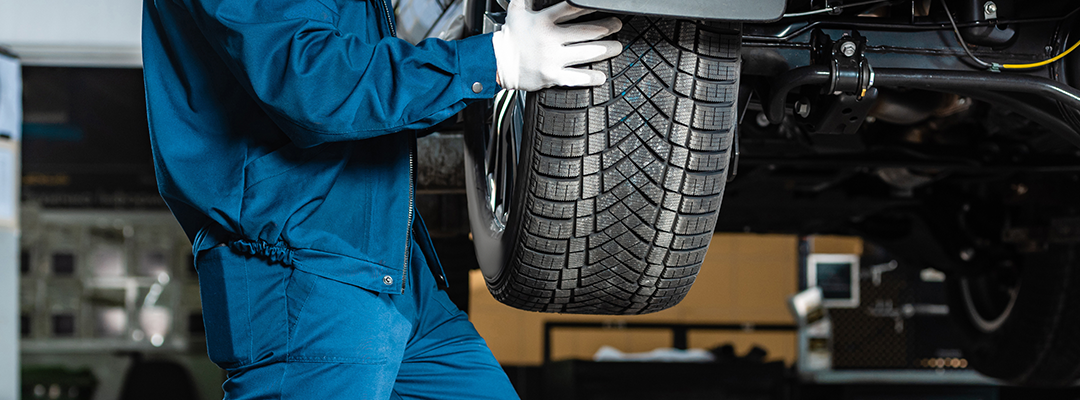
Most dealerships know tires matter. The problem is how they think about them.
DriveSure’s 2026 service retention research found that only about one-third of dealership service customers bought their last set of tires from the dealership. That leaves two-thirds heading somewhere else for a purchase that quickly turns into rotations, alignments, brakes, and future repair business.
Luke Ammann of Jimbo Nissan has been thinking about that risk for decades, going back to the Ford-Firestone recall and Ford’s “Around the Wheel” program, when he saw how much opportunity exists when dealerships pay closer attention to everything happening around the tire. His approach today: don’t wait until a customer needs four tires and hope your price wins. Build the process, inventory, communication, and trust that make the dealership the obvious choice long before replacement day arrives.
Stop Judging the Tire Business by Gross Alone
One of the easiest ways to kill a dealership tire program is to compare its margins to everything else in fixed ops.
Luke doesn’t. “Tires are not a profit center. Tires are a retention tool.”
His store operates around 17% to 20% gross on tires, and there are situations where he’ll sell them at cost rather than watch a customer leave. A customer who buys tires somewhere else now has a relationship with another service provider, one that has their contact information, a reason to send them promotions, and every rotation as another opportunity to sell brakes, maintenance, or repairs.
That philosophy has become part of the dealership’s identity: “Nobody beats Luke’s tire prices.” Employees repeat it, customers hear it, and Luke backs it up. The goal isn’t to argue over a few dollars. It’s to keep the business.
The better scorecard question: what is keeping this customer in the service lane worth over the next several years?
Make the Dealership Impossible to Overlook
Customers won’t automatically think of the dealership when they need tires. You have to make that connection for them, and do it long before they actually need a set.
At Luke’s store, tires are visible before the conversation ever starts: along the driveway, displayed inside, with point-of-purchase materials reinforcing tread condition and replacement needs. As Luke puts it, if a customer doesn’t know they’re in the tire business, “you obviously got the blinders on.”
The tire sale usually starts months before the customer is ready to buy. A customer whose tires are healthy today can still hear “you’re at 7/32, we’ll check it again at your next visit.” By the time the tires reach replacement range, the recommendation isn’t coming out of nowhere. The customer has watched the tread decline and already knows the dealership is paying attention.
Inventory is the less glamorous piece, and one of the biggest operational misses Luke sees. An advisor can make the perfect recommendation, the customer can say yes, and the process falls apart with four words: “We have to order them.” Luke works with tire suppliers to keep fast-moving sizes in stock, which can mean carrying $30,000 to $50,000 in inventory. That can look like a liability on a balance sheet. Luke sees it as the cost of being able to say yes when the customer does.
He also checks the local market every Monday morning, scanning Costco, tire chains, and supplier promotions. The point isn’t to chase every competitor’s deal. It’s to avoid finding out what the market is doing from a customer standing at the service counter.
Show Customers the Tire, Not Just the Recommendation
Tire recommendations can be hard for customers to evaluate. Most can’t see tread depth from the waiting room, and even when an advisor gives them a measurement, the number may not mean much without context.
Luke’s team makes the condition harder to misunderstand. During video MPIs, technicians use a white grease marker to write the tread measurement directly onto each tire, then show the tire, the measurement, and the tread-depth gauge in the video. A customer can see that their front tires are at 4/32 while the rears are at 8/32, on their own vehicle, not described to them by someone they just met.
A few other details worth noting from Luke’s process:
- His team avoids telling customers how much “life” is left on a tire, too many variables. They give measurements instead: here’s where you are, here’s where you were last visit, here’s where we start recommending replacement (typically 4/32 at his store)
- Videos get reviewed internally by Luke and his advisors. Poor ones get redone
- The team runs contests and bonuses around video quality to keep technicians engaged rather than rushing through it
Customers notice. Luke says people enjoy seeing their car on the lift, sometimes enough to share the video with coworkers.
Get the Recommendation to the Customer While They Can Still Say Yes
Even a great tire recommendation can fail because of timing.
Luke’s team works around a roughly 15-minute expectation for completing the MPI. Tell someone 20 or 30 minutes into their appointment that they need tires and they still have options. Tell them after 90 minutes of waiting for an oil change and the answer becomes “not today,” even if they agree the tires need attention.
Fast inspections give the advisor the opportunity. Luke also gives them the authority to act on it:
- Adjust the price on the spot
- Offer a complimentary alignment
- Offer 50% off the alignment with a tire purchase
The exact offer matters less than the ability to make a decision without sending the customer through multiple rounds of approval. Luke also pays advisors a $5 spiff per tire sold. If tires matter to retention, the compensation plan should make them matter to the people having the conversation.
If You Lost the Last Tire Sale, Start Working on the Next One
Perhaps the most useful part of Luke’s approach is that it doesn’t end when the customer buys tires somewhere else.
His dealership offers complimentary tire repairs and rotations even for customers who bought their tires at Costco or another shop. Keep rotating their tires, keep giving them updated tread measurements, keep the conversation going. You may not have sold that set, but you’ve stayed in position to sell the next one.
That same thinking applies to EV customers, who often arrive believing an electric vehicle means minimal maintenance. Luke regularly sees significant uneven tire wear on EVs from owners who were told at purchase they didn’t need to worry about maintenance. His team encourages a 5,000-mile rhythm that includes tire checks and rotations, and he works with the sales department to start that education at delivery rather than after the first set has already worn unevenly.
Whether the customer drives an EV or a gas vehicle, the principle is the same: the more useful you are between replacement events, the less reason they have to look somewhere else when replacement day comes.
Final Takeaway: Build the Tire Program Around the Customer You Want to Keep
Luke’s approach isn’t built around one promotion. It’s a connected set of processes: keep the right inventory in stock, know what competitors are offering, train advisors until they’re comfortable discussing tires, show customers measurements instead of asking for blind trust, get inspections done early enough for customers to act, and give advisors the authority to close the sale.
And if the customer buys tires somewhere else? Keep helping them anyway.
Losing a little gross on a set of tires can sting. Losing the customer costs considerably more.
Want to hear the full conversation? Listen to the full episode here.
Need help making retention feel automatic?
DriveSure helps dealerships turn oil changes into lasting relationships—with renewable benefits, service-lane prepaid maintenance, and customer-first communication tools that drive results. Book a consultation today.